



It happens at about nine in the evening. Everyone’s settled, the television’s on, and then there’s a silence of a very particular quality followed by someone opening a window.
The dog, of course, looks entirely innocent. Often he’s asleep.
Wind is one of those things owners put up with for years as a personality trait rather than a symptom. It’s usually harmless, it’s very often fixable, and occasionally it’s telling you something worth knowing.
Where the gas actually comes from
Two sources, and they’re responsible for different halves of the problem.
Swallowed air accounts for most of the volume. A dog who inhales his dinner in eleven seconds swallows a remarkable amount of air with it, and that air has to go somewhere. This is mechanical rather than dietary, and it’s the reason a change of bowl sometimes fixes a problem a change of food couldn’t.
Bacterial fermentation accounts for most of the smell. When food isn’t fully digested in the small intestine it arrives in the colon, where the resident bacteria go to work on it. Fermenting carbohydrate produces largely odourless gas. Fermenting protein produces sulphur-containing compounds, and those are what empty a room.
Which explains something that confuses people: a dog can produce a great deal of quiet gas and nobody minds, or very little that’s genuinely offensive. The smell tells you about protein reaching the colon undigested, and that’s the part worth investigating.
Steady gut support helps here – daily Probiotic Chews for Dogs support the population doing that fermenting, and a better-balanced gut ferments more efficiently and produces less of the unpleasant end of the spectrum. Give it a month before judging.
The eating-too-fast problem
Start here, because it’s the most common cause and the easiest thing to change.
A slow feeder bowl – the ones with ridges and mazes – routinely turns a five-minute meal into a fifteen-minute one and reduces air intake substantially. A large ball or a couple of clean stones in an ordinary bowl does much the same job for less money.
Better still, stop using a bowl. Scatter the kibble on the lawn, put it in a snuffle mat, or split it between a couple of puzzle feeders. It slows him down, it uses his nose, and it makes the meal last.
Feed separately if you have more than one dog. Competition makes fast eaters faster, and a dog who thinks his bowl is under threat doesn’t chew.
Smaller, more frequent meals – three rather than two – reduce both the air swallowed at any one sitting and the load on the digestive system.
Flat-faced breeds have a structural disadvantage here. Bulldogs, pugs, boxers and French bulldogs swallow more air simply because of how they’re built, and while you can’t change that, slowing the meal down helps considerably.
Diet, and the usual suspects
Dairy. Most adult dogs digest lactose poorly. Milk, cheese and yoghurt are among the most reliable ways to produce wind in a dog.
Legumes and pulses. Peas, lentils, chickpeas, beans and soy are all highly fermentable. This is worth knowing if you’re feeding a grain-free food, because grain-free almost always means legume-heavy – the carbohydrate has to come from somewhere. Plenty of dogs are windier on grain-free than they were on a food with rice in it.
Brassicas. Broccoli, cauliflower and cabbage do to dogs roughly what they do to people.
High-fat foods and fatty scraps. Fat slows gastric emptying and gives everything longer to ferment.
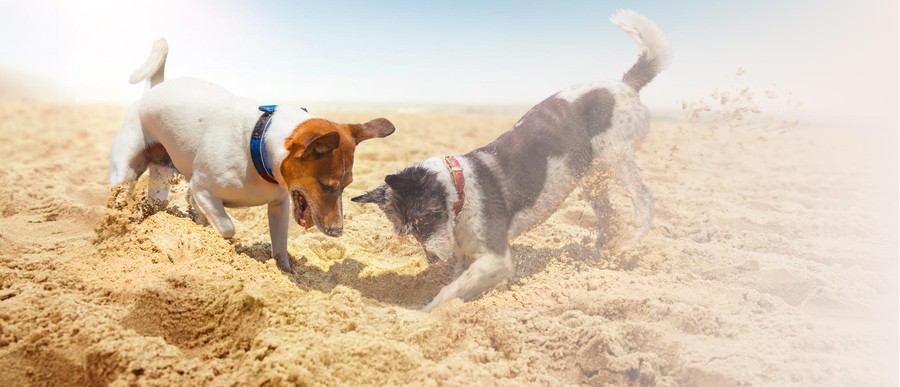
Anything spoiled or scavenged. The bin, the compost, something interesting on the beach.
Very low digestibility food. A cheap food where a large proportion passes through undigested is a food that gives the colonic bacteria a great deal to work with. If you switched to a budget brand and the wind arrived at the same time, that’s your answer.
Exercise and timing
Don’t feed immediately before or after hard exercise. Wait an hour either side.
A dog who’s been running and is panting hard swallows a lot of air, and a dog who exercises on a full stomach is asking for trouble beyond wind.
Raised feeding bowls get recommended for this, and it’s worth knowing the evidence is mixed – some research has associated raised bowls with increased bloat risk in large, deep-chested breeds. If you have a great dane or a setter, that’s a conversation with your vet rather than an internet decision.
When it’s medical
Most flatulence is dietary or mechanical. A minority isn’t, and the pattern is what distinguishes them.
Exocrine pancreatic insufficiency. The pancreas doesn’t produce enough digestive enzymes, so food passes through largely undigested. Classic picture is a dog who eats enormously, loses weight, and produces huge volumes of pale, greasy, foul stools alongside the wind. Common in german shepherds. Very treatable once identified.
Inflammatory bowel disease. Chronic wind alongside intermittent diarrhoea and sometimes vomiting.
Parasites. Giardia in particular is well known for producing wind and soft stools.
Dysbiosis. An unbalanced gut population, often following antibiotics or illness.
Food intolerance. Something in the diet that simply doesn’t agree with him.
The thread through all of these: wind that’s accompanied by other signs. On its own, in a well dog with normal stools and stable weight, it’s rarely a medical problem.
Working through it properly
Change one thing at a time and give each a fortnight, or you’ll never know what worked.
Week one and two. Slow feeder, three meals a day, and cut absolutely every extra – no table scraps, no dairy, no dentasticks, nothing but his normal food. Most owners are surprised how much is going in that they’d stopped counting.
Weeks three and four. Add gut support and keep everything else the same.
Weeks five to eight. If there’s still a problem, try a different food – a highly digestible one, ideally without a legume as the first carbohydrate. Transition properly over ten days.
Keep a note. Wind is hard to assess from memory and easy to assess from a tally on the fridge.
Fibre: the thing that cuts both ways
Fibre gets recommended for wind and it can just as easily cause it, which is why generic advice to “add fibre” so often disappoints.
Fermentable fibres – chicory inulin, beet pulp, some fruits and vegetables – are food for the gut bacteria. That’s good for the population and it does, by definition, produce gas. Introduced suddenly and in quantity, they make wind worse before they make it better.
Bulking fibres – psyllium, plain tinned pumpkin, oat bran – hold water and add form. These tend to firm stools and move things along without producing much gas.
So if you’re adding fibre for a windy dog, start with a bulking fibre, introduce it over a week rather than in one go, and use a small amount. A teaspoon of psyllium for a medium dog is plenty to begin with.
If you’re adding a fermentable fibre for gut health, expect a fortnight of adjustment and don’t abandon it on day three.
The washing-up factor
One thing worth checking that almost nobody does: the bowl.
A bowl that’s rinsed rather than washed builds up a biofilm – a thin bacterial layer that survives a quick swill under the tap. It’s not usually enough to make a dog ill, and in a dog with an already-delicate gut it doesn’t help.
Wash food and water bowls properly with hot water and detergent, daily. Stainless steel and ceramic are easier to keep clean than plastic, which scratches and holds onto residue.
Same goes for the scoop in the food bag and the container the kibble lives in. Tipping fresh food on top of the greasy remains of the last bag is a small, avoidable source of trouble.
What to stop doing
Stop feeding from the table, however small the amount. It’s the single most common reason a diet change appears not to work.
Stop changing food every few weeks. Each change disrupts the gut population and the wind that follows is the change, not the food.
Don’t give human anti-flatulence remedies without asking your vet.
And don’t assume it’s just how he is, particularly if it arrived rather than always having been there.
The one thing that isn’t wind
Worth saying plainly, because the words get confused and the difference matters enormously.
Flatulence is gas coming out. Bloat, or gastric dilatation-volvulus, is gas trapped in a stomach that may have twisted, and it kills dogs within hours.
Signs are a hard, distended abdomen, repeated unproductive retching – trying to be sick and bringing nothing up – restlessness and pacing, drooling, and obvious distress. Deep-chested breeds are most at risk.
That is an immediate emergency. Ring the vet on the way, don’t wait to see if it settles, and don’t try anything at home.
A dog who is comfortably farting on the sofa is not bloating. A dog who is pacing, retching and swelling is, until proven otherwise.
When to book an appointment
If the wind is new in a previously unaffected dog. If it comes with loose stools, weight loss, a ravenous appetite, vomiting or lethargy. If the stools are pale, greasy or unusually voluminous.
Or if you’ve worked through everything above over a couple of months and nothing has shifted – at that point a faecal test and a blood panel will tell you more than another change of food.


Are Cinnamon Ragdoll Cats Real? History, Recognition and How to Verify the Color
Top 10 Key Ingredients in Nexgard Spectra for Dogs and Cats
