

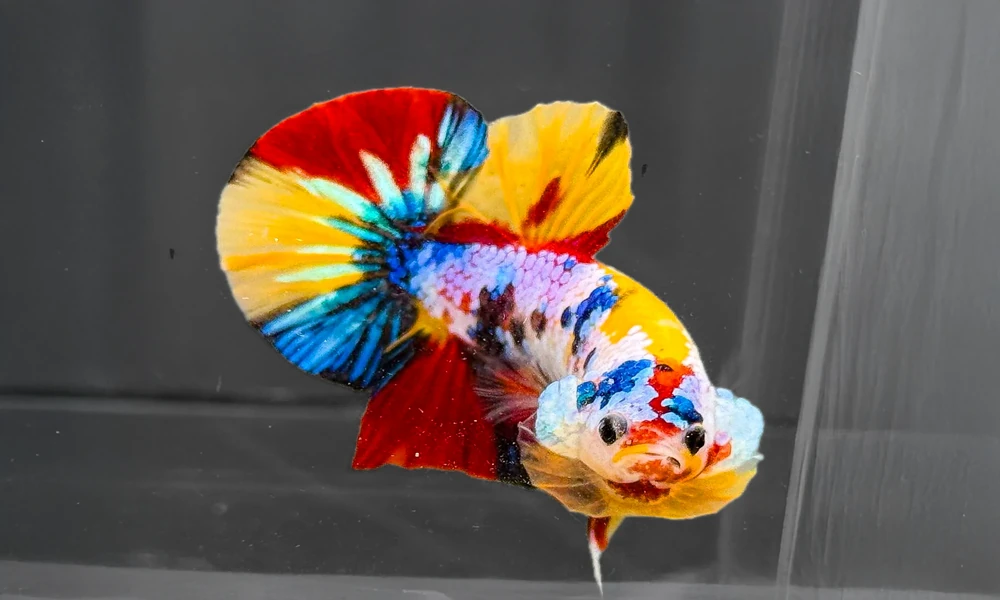

While male specimens tend to attract the most attention for their dramatic fins and bold colouration, the female betta fish is increasingly popular in its own right, offering a slightly calmer temperament, comparable colour variety, and the possibility of small group housing that males simply don’t allow.
Appearance and Distinguishing Features
Females typically have shorter fins than males and a rounder, less streamlined body shape, though selective breeding has narrowed this gap considerably in recent years, with some female lines now displaying fin lengths approaching those of males. Colour range is just as broad, spanning reds, blues, marbled patterns, and pastel tones.
Temperament Compared to Males
Females are generally less aggressive than males, though they are far from passive and still establish clear pecking orders when housed together. This reduced aggression is what makes small group housing, known as a sorority, a realistic option, provided the tank is large enough and densely planted to break up sightlines and give each fish room to retreat.
Setting Up a Sorority Tank
A sorority typically requires a minimum of five females introduced simultaneously into a heavily planted tank of at least 60 litres, since introducing fish one at a time or into too small a space tends to concentrate aggression on a single individual. Close monitoring in the first few weeks is essential, and a backup tank should be available in case any individual needs to be separated.
Diet and Water Requirements
Dietary and water requirements mirror those of males closely: a protein-rich pellet diet supplemented with occasional live or frozen food, a stable temperature between 24 and 27 degrees Celsius, and regular partial water changes to keep ammonia and nitrite at safe levels.
Solo Housing as an Alternative
Many keepers simply prefer to house a single female betta fish on its own, which sidesteps the complexity of sorority dynamics entirely while still offering the same colour and personality that draws people to the species in the first place.
Choosing Healthy Stock
When browsing female betta fish for sale, look for the same indicators that apply across the species: bright eyes, undamaged fins, even colouration, and confident swimming. Specialist retailers with dedicated systems for the species tend to offer more consistently healthy stock than generic outlets.
Is a Sorority Right for You?
A sorority tank is a rewarding but genuinely more demanding project than solo keeping, requiring more space, more careful planning, and a willingness to intervene quickly if aggression escalates. First-time keepers are generally better served starting with a single fish before attempting group housing.
Understanding Lifespan and Ageing
A typical lifespan of two to three years is standard for a well-kept female betta fish, though some individuals in exceptionally stable conditions live somewhat longer. Ageing fish often show a gradual dulling of colour and reduced activity, which is a normal part of the life cycle rather than a sign of illness, though a sudden rather than gradual change is always worth investigating through a water test first.
Seasonal Considerations for UK Keepers
UK homes can see meaningful temperature swings between summer and winter, particularly in rooms without central heating running constantly. A reliable heater with an accurate thermostat largely removes this as a concern, but it’s worth checking the tank a little more closely during cold snaps, since even a well-insulated room can drop enough overnight to stress a fish if the heater is undersized for the tank volume.
Choosing Equipment That Lasts
Spending slightly more on a reputable filter and heater at the outset tends to save money over time, since cheaper units are more prone to failure and inaccurate temperature control, both of which have outsized consequences for a fish this sensitive to sudden change. A spare heater on hand is a sensible precaution for anyone who has kept the hobby going for more than a year or two.
Substrate and Décor Choices
Substrate for a female betta fish is largely a matter of preference, though fine sand or smooth, rounded gravel is generally safer than sharp-edged material, which can tear delicate fins during normal exploration of the tank floor. Dark substrates tend to make colour pop more vividly against the backdrop, which is why many keepers favour black or dark grey sand in display setups, though this makes no practical difference to the fish’s health one way or the other.
Décor should prioritise smooth surfaces and plenty of cover without creating so dense a layout that the fish struggles to move freely. Driftwood, smooth stones, and silk or live plants all work well, while sharp plastic ornaments with rough seams are best avoided regardless of how attractive they look in the shop.
Lighting Considerations
A consistent light cycle of around eight to ten hours daily helps regulate natural behaviour and supports any live plants in the tank, while excessive lighting duration can encourage algae growth without offering any real benefit to the fish itself. A simple timer removes the guesswork and ensures consistency even when a keeper’s own schedule varies from day to day.
Handling and Transport
Minimising time spent in a bag or small transport container matters more for a female betta fish than for many hardier species, since temperature and oxygen levels in a small volume of water change quickly. A short, direct journey home, followed by a gradual acclimatisation period of floating the sealed bag in the tank for around fifteen minutes before slowly introducing tank water, gives the fish the best possible start in its new environment. Avoid the temptation to tip the fish directly into unfamiliar water, however tempting it is to see it settle in immediately, since the sudden shift in temperature and chemistry is one of the more preventable sources of early stress.
Recognising Individual Personality
One of the more surprising aspects of keeping this species is just how much individual personality varies between specimens, even within the same colour variety or batch. Some fish are bold and inquisitive from the outset, approaching the glass readily, while others take considerably longer to settle and remain more reserved even once fully acclimatised. Neither temperament is a sign of poor health; it’s simply worth getting to know an individual fish’s normal baseline behaviour so that genuine changes are easier to spot later.
A Note on Cost Versus Value
It’s worth remembering that the fish itself is usually the smallest ongoing cost in the entire setup once the initial equipment is in place. Food, water conditioner, and the occasional replacement filter sponge amount to very little over a typical two to three year lifespan, which makes the relatively modest upfront investment in a properly sized tank and reliable heater feel like considerably better value in hindsight than it might seem at the point of purchase.
One further point worth bearing in mind: patience pays off disproportionately with this species. A female betta fish that seems unremarkable in the first few days at home often reveals considerably more colour, confidence, and personality once fully settled, so it’s worth resisting the urge to judge a new fish too quickly against expectations formed from photographs or display tank behaviour alone.
Whether kept alone or as part of a carefully managed group, female specimens offer a genuinely different keeping experience from their more commonly discussed male counterparts, combining comparable colour and character with a temperament that opens up options simply not available with males.


The Collar, the Tag, and the Story: Choosing Details for a Pet Portrait

Never Be Your Cat’s Alarm Clock Again: The Smart Feeder Revolution
